Blues Legend Honeyboy Edwards Dead At 96

CHICAGO -- Grammy-winning Blues musician David "Honey Boy" Edwards, believed to be the oldest surviving Delta bluesman and whose roots stretched back to blues legend Robert Johnson, died early Monday in his Chicago home, his manager said. He was 96.


Edwards had a weak heart and his health seriously declined in May, when the guitarist had to cancel concerts scheduled through November, said his longtime manager, Michael Frank of Earwig Music Company.

Born in 1915 in Shaw, Miss., Edwards learned the guitar growing up and started playing professionally at age 17 in Memphis.

He came to Chicago in the 1940s and played on Maxwell Street, small clubs and street corners. By the 1950s Edwards had played with almost every bluesman of note - including Howlin' Wolf, Little Walter, Charlie Patton and Muddy Waters. Among Edwards' hit songs were "Long Tall Woman Blues," "Gamblin Man" and "Just Like Jesse James."

Edwards played his last shows in April at the Juke Joint Festival in Clarksdale, Miss., Frank said.

"Blues ain't never going anywhere," Edwards told The Associated Press in 2008. "It can get slow, but it ain't going nowhere. You play a lowdown dirty shame slow and lonesome, my mama dead, my papa across the sea I ain't dead but I'm just supposed to be blues. You can take that same blues, make it uptempo, a shuffle blues, that's what rock `n' roll did with it. So blues ain't going nowhere. Ain't goin' nowhere."

Edwards won a 2008 Grammy for traditional blues album and received a Grammy Lifetime Achievement award in 2010. His death represents the loss of the last direct link to the first generation of Mississippi blues musicians, Frank said.

"That piece of the history from that generation, people have to read about it from now on," Frank said. "They won't be able to experience the way the early guys played it, except from somebody who's learned it off of a record."

Edwards was known for being an oral historian of the music genre and would tell biographical stories between songs at his shows, Frank said. He was recorded for the Library of Congress in Clarksdale, Miss., in 1942.

"He had photographic memory of every fine detail of his entire life," Frank said. "All the way up until he died. He had so much history that so many other musicians didn't have and he was able to tell it."

Edwards gathered those stories in the 1997 book "The World Don't Owe Me Nothing: The Life and Times of Delta Bluesman Honeyboy Edwards." He wrote in the book that his father bought a guitar for $8 from a sharecropper and Edwards learned to play in 1929.

"I watched my daddy play that guitar, and whenever I could I would pick it up and strum on it," Edwards wrote.

Edwards was known for his far-ranging travels and played internationally. In his 90s, he was still playing about 70 shows a year. Edwards would visit with the audience after every show, taking pictures, signing autographs and talking with fans, Frank said.

Edwards earned his nickname "Honey Boy" from his sister, who told his mother to "look at honey boy" when Edwards stumbled as he learned to walk as a toddler. He is survived by his daughter Betty Washington and stepdaughter Dolly McGinister.

"He had his own unique style," Frank said. "But it was a 75-year-old style and it was a synthesis of the people before him and in his time."

By CARYN ROUSSEAU, Associated Press via huffingtonpost.com

Labels: , ,

del.icio.us Digg it Furl Netvouz RawSugar Yahoo MyWeb Google StumbleUpon

Blues Harp Song Keys - Little Walter

Since I'm sure we've all had trouble picking the key when jamming along to a song at some point, here are a few of the keys Little Walter played in...

Ah'w Baby: Song key: G, C Harp, 2nd position.
Back Track. Song key: F, Bb Harp, 2nd position.
Blues With a Feeling. Song key: A, D Harp, 2nd position. (Song key: F)
Boom, Boom Out Go The Lights, by Stan Lewis. Song key: E, A Harp, 2nd position.
Can't Hold Out Much Longer. Song key: G, C Harp, 2nd position.
I Hate To See You Go. Song key: G, C Harp, 2nd position.
Juke. Song key: E, A Harp, 2nd position.
Just Your Fool. Song key: A, D Harp, 2nd position.
Mean Old World. Song key: F, Bb Harp, 2nd position. (Song key: G)
My Babe. Song key: F, Bb Harp, 2nd position.
You're So Fine. Song key: E, A Harp, 2nd position.

If you've got any more please feel free to leave a comment. Cheers

Labels: , , , , , , , , , ,

del.icio.us Digg it Furl Netvouz RawSugar Yahoo MyWeb Google StumbleUpon

Ah'w Baby

Ah'w Baby
words and music by Marion "Little Walter" Jocobs
key of G, cross harp-C
moderately

6 6 -5 6 -5 6 -4 -5 -3 -4 -3' -2
Baby, you're lookin' a good again tonight.

6 -5 -4 -3' -2 -2 -2" -2 -2" -2 -2" -2 -2" -2
Yeah, ba by, you're lookin' good a gain tonight

-4 -4 -4 4 -4 4 -4
You are made for me, ba -by,

-2" -2 -3" -3' -2 -3' -3' -2
I can't wait for tomorrow night.

Baby, I want to will my love to you.
'Cause you're my kind of baby,
Baby, youse the one I choose.

Baby, it's a lowdown dirty shame,
Baby, it's a low down dirty shame,
Bad way they talk about you,
But I love you just the same.

Labels: , , , , , , , , , , , ,

del.icio.us Digg it Furl Netvouz RawSugar Yahoo MyWeb Google StumbleUpon

The Blues Foundation's 2010 Blues Hall of Fame


The Blues Foundation has announced the artists that it will be inducting into its Hall of Fame this year, including harmonica master Charlie Musselwhite.

Other contemporary blues inductees include Chicago blues guitarist Lonnie Brooks and popular blues-rock singer/songwriter Bonnie Raitt.
The induction ceremony will be held at the organization's annual dinner the night before the 2010 Blues Music Awards ceremony scheduled for Thursday, May 6th, 2010 at the Cook Convention Center in Memphis.

2010 Blues Hall of Fame Inductees

Labels: , , ,

del.icio.us Digg it Furl Netvouz RawSugar Yahoo MyWeb Google StumbleUpon

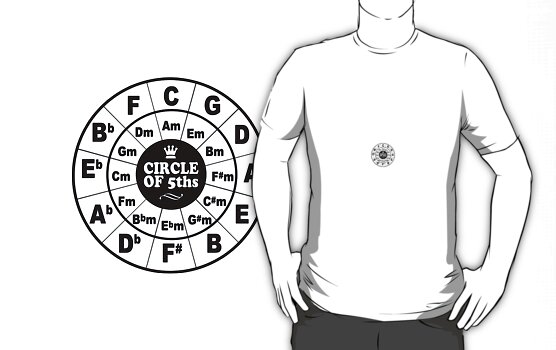
Circle of Fifths Tee


A little wearable harmonica theory for those of us who need a key reference when jamming - better yet, make the guitarist wear one so you don't have to look down! Get one here

Labels: , , , , , ,

del.icio.us Digg it Furl Netvouz RawSugar Yahoo MyWeb Google StumbleUpon

Blues Harp Profile: Sonny Terry

October 24, 1911, - March 11, 1986

The joyous whoop that Sonny Terry naturally emitted between raucous harp blasts was as distinctive a signature sound as can possibly be imagined. Only a handful of blues harmonicists wielded as much of a lasting influence on the genre as did the sightless Terry (Buster Brown, for one, copied the whoop and all), who recorded some fine urban blues as a bandleader in addition to serving as guitarist Brownie McGhee's longtime duet partner.

Blues-harp profile: Sonny TerrySaunders Terrell's father was a folk-styled harmonica player who performed locally at dances, but blues wasn't part of his repertoire (he blew reels and jigs). Terry wasn't born blind-he lost sight in one eye when he was five, the other at age 18. That left him with extremely limited options for making any sort of feasible living, so he took to the streets armed with his trusty harmonicas. Terry soon joined forces with Piedmont pioneer Blind Boy Fuller, first recording with the guitarist in 1937 for Vocalion.
Terry's unique talents were given an extremely classy airing in 1938 when he was invited to perform at New York's Carnegie Hall at the fabled From Spirituals to Swing concert. He recorded for the Library of Congress that same year and cut his first commercial sides in 1940. Terry had met Brownie McGhee in 1939, and upon the death of Fuller, they joined forces, playing together on a 1941 McGhee date for Okeh and settling in New York as a duo in 1942, There they broke into the folk scene, working alongside Leadbelly, Josh White, and Woody Guthrie.

Sonny Terry blues-harpWhile Brownie McGhee was incredibly prolific in the studio during the mid-'40s, Terry was somewhat less so as a leader (perhaps most of his time was occupied by his prominent role in Finian's Rainbow on Broadway for approximately two years beginning in 1946). There were sides for Asch and Savoy in 1944 before three fine sessions for Capitol in 1947 (the first two featuring Stick McGhee rather than Brownie on guitar) and another in 1950.
Terry made some nice sides in an R&B mode for Jax, Jackson, Red Robin, RCA Victor, Groove, Harlem, Old Town, and Ember during the '50s, usually with Brownie close by on guitar. But it was the folk boom of the late '50s and early Us that made Brownie and Sonny household names (at least among folk aficionados). They toured long and hard as a duo, cutting a horde of endearing acoustic duet LPs along the way, before scuttling their decades-long partnership amidst a fair amount of reported acrimony during the mid-'70s.
From All Music Guide to the Blues: The Experts' Guide to the Best Blues Recordings (2nd Ed) ISBN 0879305487

Labels: , , , ,

del.icio.us Digg it Furl Netvouz RawSugar Yahoo MyWeb Google StumbleUpon

Harmonica Hero T-Shirt

Harmonica Hero t-shirtA while back I posted the Harmonica Hero YouTube video. Now you can grab your very own Harmonica Hero t-shirt here. Available in various colors and styles.

Labels: , , , ,

del.icio.us Digg it Furl Netvouz RawSugar Yahoo MyWeb Google StumbleUpon

Author Sam Barry Teaches Mannish Boy Riff on Blues Harp

Sam Barry, author of How to Play the Harmonica: and Other Life Lessons, teaches Jason Headley the "Mannish Boy" (I'm a Man) riff on blues harp.


Described by his brother, Dave Barry, as "The only guy I know who's been a minister AND a coke dealer." Sam Barry is an author, a musician and a music teacher who plays in and around San Francisco in the band Los Train Wreck and tours with the all-author rock band the Rock Bottom Remainders. Sam is a regular performer on the national radio show West Coast Live.

Click here to find a copy of How to Play the Harmonica: and Other Life Lessons

Labels: , , , , , , ,

del.icio.us Digg it Furl Netvouz RawSugar Yahoo MyWeb Google StumbleUpon

Got The Blues, Can't Be Satisfied

Got The Blues, Can't Be Satisfied
words and music by Mississippi John Hurt
key of G, cross harp, C
relaxed

-4 5 -5 -4 5-5 -5 5 -4
Got the blues, can't be satisfied.

5 6 6 -7 6 -3' -3 -2
Got the blues, can't be sat -is -fied.

-6 -6 -6 6 -7 6 -6 -6 6
Keep the blues, I'll catch the train and ride.

Yes, whiskey straight will drive the blues away.
Yes, whixkey straight will drive the blues away.
That be the case, I wants a quart today.

I bought my baby a great big diamond ring.
I bought my baby a great big diamond ring,
Come right back home and caught her shaking that thing.

I said, "Babe, what makes you do me this a-way?"
Well, that I bought, now you give away.

I took my gun and broke the barrel down.
I put that joker six feet in the ground.

You got the blues, and I still can't be satisfied.
Well, some old day, gonna catch that train and ride.

Labels: , , , , , , , , , , ,

del.icio.us Digg it Furl Netvouz RawSugar Yahoo MyWeb Google StumbleUpon

Get Your Yas Yas Out

Get Your Yas Yas Out
words and music by Blind Boy Fuller
key of C, cross harp-F
moderately

6 6 6 6 6 5 6 5 6 5 6 5 6 5 6 5 -4 -3 -2
Now you got to leave my house this morning,
don't I'll throw your yas yas out o'door,

6 6 6 6 6 5 5 5 5 5 5 5 -3 -3 5 5 5 5 -4
Now you got to leave my house this morning,
don't I'll throw your yas yas out o'door.

6 6 6 6 6 6 6 6 6 6 6 5 5 -3' -2 -2
Here you come raising hell,
know what you been doin' by the way you smell.

-3 -3 -3 -3 -4 -5 5 5 6 5 5 6 5 -4 -3 -2
Now you got to leave my house this morning,
throw your yas out o' door,

6 5 6 5 -4 -3 -2
I mean, yas yas out o' door. Yeah!

Now you have to leave my house this morning,
don't I'll throw your yas yas out o'door.
Here you come raising sand,
Know what you been doin' by the way you stand.
Now you got to leave my house this morning,
don't I'll throw your yas yas out o' door.
I mean yas yas out o'door.
Now you got to leave my house this morning,
yas yas out o' door.
Now you got to leave my house this morning,
don't I'll throw your yas yas out o' door.
Look at you drinkin, went right through your head.
Had to drink a belt before you went to bed,
Now you got to leave my house this morning,
don't I'll throw your yas yas out o' door
I mean yas yas out o' door.
Now you got to leave my house this morning,
don't I'll throw your yas yas out o' door.
Now you got to leave my house this mornin',
don't I'll throw your yas yas out o' door,
Oh, zee zah, be dum bum,
Batta, batta, batta, dado zam,
Now you got to leave my house this mornin',
throw your yas yas out o'door.

Labels: , , , , , , , , , , ,

del.icio.us Digg it Furl Netvouz RawSugar Yahoo MyWeb Google StumbleUpon

Good Liquor Gonna Carry Me Down

Good Liquor Gonna Carry Me Down
words and music by Big Bill Broonzy
key of C, third position-Bb
moderatly

-4 -4 -4 -4-4-4 -5 -3 -4-4 -4 -4 -3"
Lord I know a little girl 'bout sixteen years old

-3 -4 -4 -4 -4 -5 -4 -3 -4-3 -4 -4 -4
She says Bill stop drinkin I will sat is fy your soul

(chorus)

-3 -4 -3 -4 -4-3 2" -1
But I just keep on a-drinkin',

-4 -3 -4 -3 -3' -2'
Yeah, I keep on drinkin'

-3' -3 -3" 4 4 4 -3-3"
Yeah, I just keep on a drinkin'

-3 -4 -3-3" -2" -2" -1
Till good liquor carry me down.

Now my woman told me about fifteen years ago
Bill you gonna drink one of these mornings
and you'll never drink no more.
(chorus)
Yes I went to the doctor with my head in my hands
The doctor said Big Bill I think I'll have to
give you monkey glands.
(chorus)
Lord my woman told me to stop drinkin' and come on home,
Say If you don't Big Bill some other man
gonna carry your business home.
(chorus)

Labels: , , , , , , , , , , ,

del.icio.us Digg it Furl Netvouz RawSugar Yahoo MyWeb Google StumbleUpon

Quick Blues Harp Tip

Get in the habit of frequently rapping the harmonica (mouthpiece side down) against your leg or palm to knock out the excess saliva and condensation from your breath. Do this before and after you put the harmonica into your mouth. If the reeds are stuck together with saliva, they can't vibrate and make sound.

Labels: , , , , , , , ,

del.icio.us Digg it Furl Netvouz RawSugar Yahoo MyWeb Google StumbleUpon

Dark and Dreary

Dark and Dreary
words and music by Joe Josea and Elmore James
key of C, third position-Bb
moderately

4 -4 -5 -5 -4 -4 6 -5 -4 -3 -4 -2'
I have lost my baby, almost lost my mind.

4 -4 -5 -4 -4 -6 -5 6 -5 -3 -4 -2'
I've lost my baby, almost lost my mind.

6 6 6 -6 6 6 6 -4 -4 -3 -4 -2'
Way she treat me, gonna drive a man stone blind.

Well, the road seemed dark and dreary, while I traveled down that way.
Well, my baby left me, she just come back home today.

Oh, I love my baby, tell the world I do
Oh, I love my baby, tell the world I do.
Well, I need a little lovin', darlin', gonna make my dream come true.

Oh, I love you darlin', like a schoolboy loves his pie.
Now ain't that the way to treat me, darlin', my hurt's so long I will die.

Labels: , , , , , , , , , , ,

del.icio.us Digg it Furl Netvouz RawSugar Yahoo MyWeb Google StumbleUpon

Blues Harp Profile: James Cotton

At his high energy 1970s peak as a bandleader, James Cotton was a bouncing, sweaty, whirling dervish of a bluesman, roaring his vocals and all but sucking the reeds right out of his defenseless little harmonicas with his prodigious lungpower. Due to throat problems, Cotton's vocals are no longer what they used to be, but he remains a masterful instrumentalist.

Cotton had some gargantuan shoes to fill when he stepped into Little Walter's slot as Muddy Waters's harp ace in 1954, but for the next dozen years, the young Mississippian filled the integral role beside Chicago's blues king with power and precision. Of course, Cotton prepared for such a career move for a long time, having learned how to wail on harp from none other than Sonny Boy Williamson himself.

Cotton was only a child when he first heard Williamson's fabled radio broadcasts for King Biscuit Time over KFFA out of Helena, AR. So sure was Cotton of his future that he ended up moving into Williamson's home at age nine, soaking up the intricacies of blues harpdom from one of its reigning masters. Six years later, Cotton was ready to unleash a sound of his own.

Gigging with area notables Joe Willie Wilkins and Willie Nix, Cotton built a sterling reputation around West Memphis, following in his mentor's footsteps by landing his own radio show in 1952 over KWEM. Sam Phillips, whose Sun label was still a fledgling operation, invited Cotton to record for him, and two singles commenced: "Straighten Up Baby" in 1953 and "Cotton Crop Blues" the next year. Legend has it Cotton played drums instead of harp on the first platter.

buy 100% Cotton
In 1974, Cotton signed with Buddah and released 100% Cotton, one of his most relentless LPs, with Matt "Guitar" Murphy sizzlingly backing him up. A decade later, Alligator issued another standout Cotton LP, High Compression, that was split evenly between traditional style Chicago blues and funkier, horn driven material. Harp Attack!, a 1990 summit meeting on Alligator, paired Cotton with three exalted peers: Wells, Carey Bell, and comparative newcomer Billy Branch. Antone's Records was responsible for a pair of gems: a live 1988 set reuniting the harpist with Murphy and Tucker and a stellar 1991 studio project, Mighty Long Time.
Cotton still commands a huge following, even though serious throat problems have tragically robbed him of his once ferocious roar. That malady ruined parts of his Grammy nominated album for Verve, Living the Blues; only when he stuck to playing harp was the customary Cotton energy still evident. ~ Bill Dahl
From All Music Guide to the Blues: The Experts' Guide to the Best Blues Recordings (2nd Ed)

Labels: , , , , ,

del.icio.us Digg it Furl Netvouz RawSugar Yahoo MyWeb Google StumbleUpon

Blues Harp Profile: Jimmy Reed

September 6, 1925 - August 29, 1976

Reed was born on September 6, 1925, on a plantation in or around the small burg of Dunleith, MS. He stayed around the area until he was 15, learning the basic rudiments of harmonica and guitar from his buddy Eddie Taylor, who was then making a name for himself as a semi-pro musician, working country suppers and juke joints. Reed moved up to Chicago in 1943, but was quickly drafted into the Navy, where he served for two years. After a quick trip back to Mississippi and marriage to his beloved wife Mary (known to blues fans as "Mama Reed"), he relocated to Gary, IN, and found work at an Armour Foods meat packing plant while simultaneously breaking into the burgeoning blues scene around Gary and neighboring Chicago. The early '50s found him working as a sideman with John Brim's Gary Kings (that's Reed blowing harp on Brim's classic "Tough Times" and its instrumental flipside, "Gary Stomp") and playing on the street for tips with Willie Joe Duncan, a shadowy figure who played an amplified, homemade one-string instrument called a Unitar. After failing an audition with Chess Records (his later chart success would be a constant thorn in the side of the firm), Brim's drummer at the time -- improbably enough, future blues guitar legend Albert King -- brought him over to the newly formed Vee-Jay Records where his first recordings were made. It was during this time that he was reunited and started playing again with Eddie Taylor, a musical partnership that would last off and on until Reed's death. Success was slow in coming, but when his third single, "You Don't Have to Go" backed with "Boogie in the Dark," made the number five slot on Billboard's charts, the hits pretty much kept on coming for the next decade.

Blues-harp profile: Jimmy ReedBut if selling more records than Muddy Waters, Howlin' Wolf, Elmore James or Little Walter brought the rewards of fame to his doorstep, no one was more ill-equipped to handle it than Jimmy Reed. With signing his name for fans being the total sum of his literacy, combined with a back-breaking road schedule once he became a name attraction and his self-description as a "liquor glutter," Reed started to fall apart like a cheap suit almost immediately. His devious schemes to tend to his alcoholism -- and the just plain aberrant behavior that came as a result of it -- quickly made him the laughing stock of his show business contemporaries. Those who shared the bill with him in top-of-the-line venues like the Apollo Theater -- where the story of him urinating on a star performer's dress in the wings has been repeated verbatim by more than one oldtimer -- still shake their heads and wonder how Jimmy could actually stand up straight and perform, much less hold the audience in the palm of his hand. Other stories of Jimmy being "arrested" and thrown into a Chicago drunk tank the night before a recording session also reverberate throughout the blues community to this day. Little wonder then that when he was stricken with epilepsy in 1957, it went undiagnosed for an extended period of time, simply because he had experienced so many attacks of delirium tremens, better known as the "DTs." Eddie Taylor would relate how he sat directly in front of Reed in the studio, instructing him while the tune was being recorded, exactly when to start to start singing, when to blow his harp, and when to do the turnarounds on his guitar. He also appears, by all accounts, to have been unable to remember the lyrics to new songs -- even ones he had composed himself -- and Mama Reed would sit on a piano bench and whisper them into his ear, literally one line at a time. Blues fans who doubt this can clearly hear the proof on several of Jimmy's biggest hits, most notably "Big Boss Man" and "Bright Lights, Big City," where she steps into the fore and starts singing along with him in order to keep him on the beat.
But seemingly none of this mattered. While revisionist blues historians like to make a big deal about either the lack of variety of his work or how later recordings turned him into a mere parody of himself, the public just couldn't get enough of it. Jimmy Reed placed 11 songs on the Billboard Hot 100 pop charts and a total of 14 on the charts, a figure that even a much more sophisticated artist like B.B. King couldn't top. To paraphrase the old saying, nobody liked Jimmy Reed but the people.Jimmy Reed Highway

Reed's slow descent into the ravages of alcoholism and epilepsy roughly paralleled the decline of Vee-Jay Records, which went out of business at approximately the same time that his final 45 was released, "Don't Think I'm Through." His manager, Al Smith, quickly arranged a contract with the newly formed ABC-Bluesway label and a handful of albums were released into the '70s, all of them lacking the old charm, sounding as if they were cut on a musical assembly line. Jimmy did one last album, a horrible attempt to update his sound with funk beats and wah-wah pedals, before becoming a virtual recluse in his final years. He finally received proper medical attention for his epilepsy and quit drinking, but it was too late and he died trying to make a comeback on the blues festival circuit on August 29, 1976.

All of this is sad beyond belief, simply because there's so much joy in Jimmy Reed's music. And it's that joy that becomes self evident every time you give one of his classic sides a spin. Although his bare bones style influenced everyone from British Invasion combos to the entire school of Louisiana swamp blues artists (Slim Harpo and Jimmy Anderson in particular), the simple indisputable fact remains that -- like so many of the other originators in the genre -- there was only one Jimmy Reed.
From All Music Guide to the Blues: The Experts' Guide to the Best Blues Recordings (2nd Ed) ISBN 0879305487

Labels: , , , , , ,

del.icio.us Digg it Furl Netvouz RawSugar Yahoo MyWeb Google StumbleUpon

An Introduction to Tongue Blocking

Here's a quick and basic video lesson on blues harp tongue blocking...

Some Tips: work on getting a good clean note while tongue blocking. After you master that, work on moving the harmonica around playing simple songs while keeping them sounding good. Then work on all your riffs until you get those solid. Then work on octaves and flutters and such until they are easy. Then work on using those octaves to fatten your riffs up where you can and slowly they'll start to become part of your playing.

Labels: , , , , , , , ,

del.icio.us Digg it Furl Netvouz RawSugar Yahoo MyWeb Google StumbleUpon

Feel Like Going Home

words and music by Muddy Waters
key of G, cross harp-C
moderately

-2 -2 -3' -2 -5 -4 -3' -3 -2 -2 -2 -1 -2" -2 -2 -2
Well. it's gettin' late in the evenin', I feel like blowing' my horn,

2 2 -2 -2 2 -2-2 -2-3 -3" -2 -2
When I woke up this mornin' all I had was gone

-5 -4 -3' -3-2 -3 -1 -2 -1 2 -2 -2 2 -2
Late in the evenin', child, I feel like, like blowin' my horn,

-2 -3 -4 -4 -4 4 -1 -1 -1 -4 4 -3' -2 -2 -2 -1 -2
Well, I woke up this mornin' darlin', all I had was gone.

Labels: , , , , ,

del.icio.us Digg it Furl Netvouz RawSugar Yahoo MyWeb Google StumbleUpon

Five Long Years

Five Long Years
words and music by Eddie Boyd
Key of Eb, cross harp-Ab
slow blues

-4 -5 6 -5 6 -5 6 -7
If you've ever been mistreated

-2 -3' 4 -4 -3 -2 2 -2
you know what I'm talking a -bout,

6 6 -7 6 -4 4 -3 -2
If you ever been mistreated

-2 -3' 4 -4 4 -3 -2 2 -2
You know just what I'm talking about,

(chorus)

-3 -3 -4 5 -5 -4 5 5 -4
I worked five long years for one woman,

-2 -2 -3' -2 -5 -4 4 -3' -2
And she had the nerve to put me out.

Tomi Leino playing blues harp for Eddie Boyd's memorial concert at Malmitalo in Helsinki, Finland 18th of February 2005.

Labels: , , , , , ,

del.icio.us Digg it Furl Netvouz RawSugar Yahoo MyWeb Google StumbleUpon

First Time I Met the Blues

First Time I Met the Blues
words and music by E.Montgomery
F, straight harp
Slowly

-2 -5 -5 -5 5 5 4
The first time I met the blues,

5 5 -5 -5 -5 5 4 4 5 5 4
Don't you know I was walkin' down through the woods

7 -5 6 6 -5 6 6 -5 5 6
Yes, the first time I met the blues,

7 -7 7 7 5 5 4 4 4 -2
Don't know I was walkin' through the woods,

7 6 6 6 -5 5 6 5 4
Yes, she started botherin' my house

7 -7 7 -7 7 4 6 6 -5 4 4 -1 -1
Don't you know you done me all the harm you could.

Buddy Guy performing First Time I Met The Blues, with David Myers, bass, from the movie Chicago Blues, in 1970.

Labels: , , , , ,

del.icio.us Digg it Furl Netvouz RawSugar Yahoo MyWeb Google StumbleUpon

Come Back Baby

Mance Lipscomb- Come Back Baby

Come Back Baby
words and music by Mance Lipscomb
key of A, cross harp-D
slowly

6 6 6 6 -7 6 -5
Come back, baby, please don't go.

-7 -7 -7 -7 6 6 -4 -4 -4 4 -3'
The way I love you, baby, you'll never know.

-3 -4 6 6 6 6 6 6 -4 -4 4 -3' -2
Come back, baby, let's talk it o -ver one more time.

Labels: , , , , , ,

del.icio.us Digg it Furl Netvouz RawSugar Yahoo MyWeb Google StumbleUpon